

 Facebook
 X
X
 Pinterest
 Copy Link
Four Key Strategies for Steering Your Real Estate Enterprise Through 2024 and Beyond

How to Succeed in Real Estate in 2024
The real estate market can be tough, especially in times of economic uncertainty. But if you have a growth mindset and follow these four habits, you can position yourself for success in 2024 and beyond:
Manage your time and energy wisely.
This means blocking out time for work, but also making time for yourself and your loved ones. Edna Kimble, the No. 1 REALTOR® in the Century 21 system for units in 2022, credits her success to her time management skills. “It’s not just about blocking out dedicated hours for business,” she says. “It’s also about making time to take care of yourself, work out, and be with your family.”
Never stop learning.
The real estate market is constantly changing, so it’s important to stay up-to-date on the latest trends and technologies. Jessica Beggins Houston, a third-generation CENTURY 21 affiliated agent in Tampa, FL, has been diligent about learning and leveraging the MoxiWorks® products suite to be more effective and efficient in marketing and managing her listings. “Whether it’s technology and AI tools, or the latest financing options, or trends in the market, you have to keep educating yourself,” she says.
Build relationships with your clients and colleagues.
Create a network of high-performing colleagues that collaborate and inspire each other to go farther. Adam Oberski from Northville, MI leads a team of 250 affiliated agents and is always pushing them to improve their health and fitness. “When you get people to set goals together and be better, it also motivates them in business,” he says.
Give back to your community.
The advisors who have the most longevity and loyalty are those who truly treat their customers like family. Ted Dawson, one of the top brokers in Jackson Hole, WY for over 20 years, is a prime example. “A few weeks ago, he sold a property for $15M,” says Miedler. “But I know he treats every single customer with the same authentic care, even one who’s buying a $25K lot.” Dawson also serves his community in other ways, such as shoveling snow from the roofs of seniors and cutting his long hair for Locks of Love.
By following these four habits, you can build a successful real estate career in 2024 and beyond. Remember, people will always strive to be homeowners. It’s the place you can feel comfortable in, and live your life’s most important and intimate moments.
Here are some additional tips for navigating the real estate market in 2024 and beyond:
- Focus on your niche. Whether you specialize in luxury homes, first-time homebuyers, or investment properties, focus on becoming the go-to expert in your niche.
- Use technology to your advantage. There are a number of great real estate software programs and tools that can help you streamline your business and be more efficient.
- Provide excellent customer service. This means being responsive to your clients’ needs, going above and beyond to help them achieve their goals, and building relationships with them that last.
The real estate market can be challenging, but it’s also an incredibly rewarding career. By following these tips, you can set yourself up for success in 2024 and beyond.
Foreclosures and Bankruptcies: Why the Housing Market Isn’t Crashing

Why the Housing Market Isn’t Crashing, Despite Rising Foreclosures and Bankruptcies
Recent news articles about rising foreclosures and bankruptcies may be causing some people to worry about the housing market. However, it’s important to remember that these are just two indicators of the overall health of the economy, and they don’t necessarily mean that the housing market is headed for a crash.
In fact, there are a number of reasons why the housing market is likely to remain strong in the coming months and years. First, the unemployment rate is at a near-record low, and wages are rising. This means that more people are able to afford to buy homes.
Second, the supply of homes for sale is still relatively low. This is due to a number of factors, including the fact that many homeowners are reluctant to sell their homes in the current market, and that there has been a shortage of new construction in recent years.
Third, interest rates are still relatively low, which makes it more affordable for people to buy homes.
While foreclosures and bankruptcies have increased in recent months, they are still well below pre-pandemic levels. This is likely due to the fact that the government provided a number of programs to help homeowners stay in their homes during the pandemic.
Additionally, American homeowners have a tremendous amount of equity in their homes. This means that they have a financial cushion that can help them avoid foreclosure if they experience financial hardship.
The increase in bankruptcies is also not dramatic. The number of bankruptcies has gone up slightly since last year, but it is still well below pre-pandemic levels. This is likely due to the fact that the government provided trillions of dollars in aid to individuals and businesses during the pandemic.
Overall, the data shows that the housing market is not in danger of crashing. While foreclosures and bankruptcies are on the rise, they are still well below pre-pandemic levels. Additionally, American homeowners have a tremendous amount of equity in their homes, which can help them avoid foreclosure.
Here are some additional factors that are supporting the housing market:
- Strong demand from first-time homebuyers: First-time homebuyers are the largest demographic of homebuyers, and they are still very active in the market. This is because millennials are reaching the age where they are ready to buy homes, and they are also benefiting from rising wages and low interest rates.
- Investment demand from institutional investors: Institutional investors, such as hedge funds and private equity firms, are also investing heavily in residential real estate. This is because they see housing as a safe and reliable investment.
- Government support: The government is also supporting the housing market through a number of programs, such as the Federal Housing Administration (FHA) loan program and the Veterans Administration (VA) guaranteed loan program. These programs make it easier for people to qualify for home loans, which helps to boost demand for housing.
Conclusion
While there are some challenges facing the housing market, such as rising inflation and supply chain disruptions, the overall outlook is positive. The unemployment rate is low, wages are rising, interest rates are still relatively low, and there is a strong demand for housing from first-time homebuyers and institutional investors. The government is also supporting the housing market through a number of programs.
As a result, it is unlikely that the housing market will crash in the coming months and years.
Exploring the Unstoppable Ascent of Home Prices in 2023

Unraveling the Market Dynamics
Current Trends and Historical Context
In the ever-evolving real estate landscape, discerning the reasons behind the continual rise in home prices stands crucial for both prospective buyers and sellers. 2023 witnesses a robust rebound in property values, marking a significant departure from the fleeting dip experienced in the latter half of the previous year.
Graphically representing this phenomenon, a meticulous analysis of national data unveils a clear trajectory. The initial months of 2022 saw an unparalleled surge in home prices, depicted through towering green bars in our graphical representation. However, this trend was unsustainable, leading to a necessary market correction and a subsequent, albeit temporary, decrease in values, illustrated by the red bars. Media narratives fixated on this decline, fostering an atmosphere of uncertainty and apprehension.
Fast forward to 2023, the market experiences a resurgence, albeit at a steadier and more sustainable pace, once again illustrated by green bars on our diagram. This shift towards normalization in price appreciation is a positive indicator for market stability and long-term growth, providing a solid foundation for both buyers and sellers.
Insight from Industry Experts
Orphe Divounguy, a Senior Economist at Zillow, contextualizes these shifts, highlighting the temporary nature of the downturn from July 2022 to January 2023, and underscoring the impressive rebound in 2023. He emphasizes the resilience of the housing market, painting a picture of robustness and growth.
Decoding the Price Surge: Supply and Demand Imbalance
The Mortgage Rate Lock-In Effect
A pivotal factor driving this upward trajectory in home prices is the pervasive shortage of available properties, set against the backdrop of unwavering demand. The intricacies of this scenario are further complicated by the influence of mortgage rates. As rates ascend, prospective buyers exhibit a tendency to retract, leading to a moderation in demand. Concurrently, existing homeowners grapple with the prospect of relinquishing their favorable mortgage rates, dissuading them from selling and transitioning to higher rates. This phenomenon, termed the ‘mortgage rate lock-in effect’, plays a substantial role in diminishing the supply of available homes.
Analyzing the Market Equilibrium
The intricate dance between supply and demand reaches a critical juncture, as the reduction in available properties notably outpaces the dip in buyer interest. Freddie Mac elucidates this phenomenon, emphasizing that while rising interest rates have tempered demand, their more pronounced impact on supply has tipped the scales, culminating in a renewed increase in home prices.
Navigating the Market: Strategies for Buyers and Sellers
A Guide for Prospective Homeowners
For those poised on the brink of homeownership, apprehensions regarding potential depreciation in property values can be laid to rest. The current market trajectory offers a promise of appreciation, rendering property investment a wise and potentially lucrative decision. Homeownership stands as a testament to financial foresight, providing a tangible asset that appreciates over time.
Insights for Sellers
Sellers, previously ensnared by uncertainties pertaining to fluctuating home values, can now navigate the market with confidence. The prevailing conditions are ripe for listing properties, as the data unequivocally points towards a market skewed in favor of sellers. Engaging with a seasoned real estate agent ensures a strategic market entry, maximizing returns on your property investment.
Conclusive Thoughts: Seizing Market Opportunities
The labyrinth of real estate demands a nuanced understanding of market forces, particularly in the context of fluctuating home prices. 2023 emerges as a year of stabilization and growth, offering a fertile ground for both buying and selling endeavors. Collaborating with local real estate professionals ensures a tailored strategy, aligning your aspirations with the current market rhythm.
The Perks of Selling Your House When Inventory Is Low

Capitalizing on the Current Real Estate Market: Why Now is an Optimal Time to Sell Your Home
In the realm of real estate, timing can significantly impact the selling experience and the financial return on a property. Currently, we find ourselves amidst a unique market scenario where the inventory of homes available for sale is substantially lower than the norm. This unique situation presents an array of benefits for homeowners contemplating selling their properties. Here, we delve into the perks of selling your home in a low inventory market and how you can harness the current conditions to your advantage.
A Seller’s Market: The Low Inventory Phenomenon
The real estate market currently tilts in favor of sellers due to a notable discrepancy between supply and demand. There are more prospective buyers in the market than there are homes available for sale. This supply-demand imbalance enhances the desirability and value of the homes that are on the market.
Dissecting the Inventory Shortage
In a balanced market, the demand from buyers and the supply of homes for sale find an equilibrium. However, the present market conditions deviate from this equilibrium, with the number of active listings significantly lower than usual. To illustrate, recent data from Realtor.com reveals a stark contrast in the number of active listings in September of this year compared to more typical market conditions in past years.
Reaping the Benefits: Why Sell Now?
The low inventory scenario is a boon for sellers, yielding several advantages:
1. Increased Home Values:
With more buyers vying for a limited number of homes, sellers can often command higher prices for their properties.
2. Rapid Sales:
Homes are selling at a brisk pace, with many properties spending less time on the market compared to past years.
3. Multiple Offers:
The likelihood of receiving multiple offers is higher, given the competition among buyers.
4. Favorable Negotiation Terms:
Sellers are in a stronger position to negotiate favorable terms, whether it be on price, closing dates, or contingencies.
Preparing Your Home for Sale
To maximize the benefits of selling in a low inventory market, it’s crucial to have a well-prepared home and a strategic approach to pricing and marketing.
Pricing it Right:
Work with a trusted local real estate agent to determine the optimal listing price that reflects the current market conditions.
Professional Marketing:
Invest in high-quality marketing materials, including professional photography and well-crafted listing descriptions, to showcase your home in the best light.
Staging to Impress:
A well-staged home can create a favorable first impression and help prospective buyers envision themselves in the space.
Leveraging Digital Platforms:
Utilize online platforms to reach a wider audience and generate more interest in your property.
Conclusion
The current low inventory real estate market offers a golden opportunity for sellers to achieve a successful and lucrative home sale. By understanding the dynamics at play and strategizing accordingly, sellers can significantly benefit from the prevailing market conditions.
Navigating Housing Affordability: The Advantages of Multi-Generational Living

In the contemporary landscape of escalating housing prices, a burgeoning number of prospective homeowners are seeking innovative solutions to the challenge of securing a residence. Multi-generational living has emerged as a viable answer to this quandary. This living arrangement encompasses two or more adult generations cohabitating in a singular dwelling, potentially including siblings, parents, and grandparents. This article delves into the numerous reasons underpinning the increasing popularity of this choice among buyers.
Economic Efficiency and Cost Reduction
Multi-generational homes are becoming increasingly recognized for their substantial economic benefits. According to a comprehensive study conducted by the National Association of Realtors (NAR), 28% of first-time buyers and 11% of those purchasing a home for the second or subsequent time are gravitating towards multi-generational residences primarily for the cost savings associated with this living arrangement. This mode of living enables family units to consolidate their financial resources, thereby distributing the economic burden of mortgage payments, utility bills, property taxes, and maintenance costs. This collaborative approach to homeownership significantly enhances affordability, providing invaluable support to first-time buyers navigating the complexities of today’s real estate market.
Achieving Spatial Ambitions
A sizable segment of buyers, comprising another 28% of first-time purchasers and 18% of repeat buyers, are opting for multi-generational homes with the objective of acquiring more spacious living quarters. This choice is particularly prevalent among repeat buyers who find themselves in the dual role of caregiving for aging parents while welcoming young adults back into the family home. By amalgamating their financial resources, these families are able to attain the spacious and comfortable living environment they desire, which would otherwise remain beyond their financial reach.
The Triangle Business Journal articulates this sentiment succinctly, highlighting how multi-generational living facilitates the acquisition of a larger home through the strategic pooling of income, credit, and down payment contributions from all cohabitants.
Expert Guidance: A Prerequisite for Success
Embarking on the journey to find the ideal multi-generational home necessitates a nuanced approach, given the diversity of preferences and requirements inherent to this living arrangement. It is imperative to ensure that the selected residence affords sufficient personal space for each occupant, provides areas for communal interaction, and is adaptable to the needs of elderly family members.
Enlisting the expertise of a seasoned real estate agent becomes indispensable in this context. Their in-depth local market knowledge and experience in navigating the unique dynamics of multi-generational living arrangements empower them to identify properties that align seamlessly with the specific needs and aspirations of all family members. MoneyGeek.com encapsulates this perspective, emphasizing the transformative impact of a well-suited multi-generational property on the quality of life and success of communal living.
Conclusion: A Strategic Approach to Homeownership
In summation, the multi-generational living model stands out as a strategic response to the contemporary affordability crisis in the housing market. By fostering a culture of shared financial responsibility and communal living, it paves the way for a more accessible and achievable homeownership experience. For families contemplating this living arrangement, the guidance of a local real estate professional is invaluable in navigating the journey towards finding a home that embodies the perfect synergy of affordability, space, and comfort.
California Central Valley Real Estate market

In August 2023, the median listing home price in Central Valley, CA was $299.9K, which was down 2% year-over-year. The median listing home price per square foot was $246, and the median home sold price was $313K.
Housing costs in Central Valley are 28% higher than the national average. The overall cost of living in Central Valley is 20% higher than the national average.
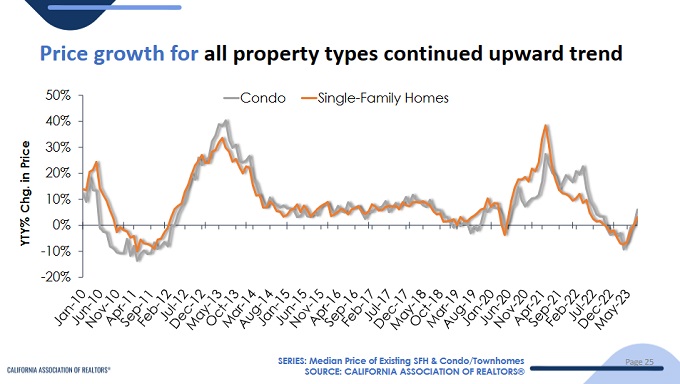
In California, home prices rose by 5 percent between August 2022 and August 2023. However, sellers in many counties are more likely to slash asking prices and see their homes remain longer on the market.
Here are some other California housing market trends:
- San Francisco and San Jose experienced the greatest price decline, falling 13% and 12.7%, respectively.
- Sacramento, San Diego, Los Angeles, and Riverside all experienced price declines between 8% and 12%.
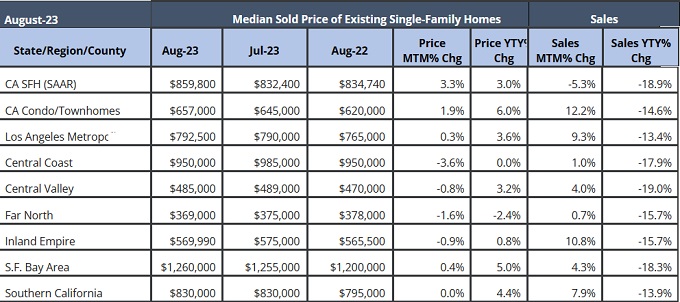
- The Central Coast saw a sharp decline in prices (-3.6%) even though sales rose 1% from July’s volume.
Here’s some more information about the Central Valley real estate market:
- The median sold price for existing single-family homes in the Central Valley was $485,000 in August 2023. This was a slight decrease of 0.8% from the previous month, but a 3.2% increase from the previous year.
- Home sales in the Central Valley increased by 4% from the previous month, but decreased by 19% from the previous year.
- Tulare County saw the biggest monthly jump in sales activity, increasing by 24.8%. However, sales were down 7% annually.
- The median listing home price in California Valley was $799K in August 2023, which was up 30.4% from the previous year. The median listing home price per square foot was $402.
Century 21 Real Estate

Century 21 Real Estate is a well-known global real estate brand that has been in the industry for over 52 years, providing exceptional services to both buyers and sellers. With a vast network of experienced real estate agents, Century 21 has become a trusted name in the industry, known for its professionalism, reliability, and quality customer service. In this article, we will delve into the history of Century 21 Real Estate, its key offerings, and how it stands out in the competitive real estate market.
History and Background
Century 21 Real Estate was founded in 1971 by two real estate agents, Art Bartlett and Marsh Fisher, in Orange County, California. Starting with just a small number of agents, the company rapidly expanded its operations and established a strong presence in the real estate market.
Over the years, Century 21 has grown into a global network, with offices in 88 countries and territories. The company operates under the parent company Realogy Holdings Corp., a leading provider of real estate services. With its vast network, Century 21 has become one of the largest residential real estate sales organizations globally.
Services and Offerings
Century 21 Real Estate offers a comprehensive range of services to cater to the diverse needs of its customers. Whether you are buying or selling a property, Century 21 has the expertise and resources to assist you every step of the way.
Buyers can benefit from the extensive listing database of Century 21, which includes a wide variety of residential and commercial properties. With the help of their knowledgeable agents, buyers can find properties that meet their specific requirements and budgets. The agents also provide insights and guidance throughout the buying process, ensuring a smooth and hassle-free experience.
For sellers, Century 21 offers an effective marketing strategy to help sell properties quickly and at the best possible price. Their agents utilize various advertising channels, both online and offline, to attract potential buyers. They also assist in preparing the property for sale, from staging to professional photography, to make it more appealing to buyers.
In addition to buying and selling services, Century 21 Real Estate also provides property management services. They can help property owners manage their investments, ensuring maximum returns and minimal stress. From finding tenants to handling maintenance and rent collection, Century 21 takes care of all aspects of property management.
The Century 21 Advantage
Century 21 Real Estate stands out in the crowded real estate market due to its unique advantages and strengths. Here are some key factors that set them apart:
Global Network:
With offices in 88 countries and territories, Century 21 has a vast international reach. This global network allows them to connect buyers and sellers from different parts of the world, enabling seamless property transactions.
Training and Support:
Century 21 is committed to providing its agents with the necessary training and support to excel in their roles. Agents undergo rigorous training programs to enhance their skills and stay updated with the latest trends in the real estate market. This ensures that customers receive top-notch services from knowledgeable and competent professionals.
Technology-Driven Approach:
Century 21 leverages technology to streamline and enhance the real estate experience. Their user-friendly website and mobile app enable easy property searches and access to essential information. They also utilize advanced marketing tools and analytics to maximize the reach and impact of their listings.
Reputation and Trust:
With over four decades of experience, Century 21 has built a solid reputation for delivering exceptional service and achieving successful outcomes for its clients. The company has received numerous industry accolades and recognition for its innovation, integrity, and professionalism.
Conclusion:
Century 21 Real Estate has established itself as a global leader in the real estate industry. With a rich history, comprehensive services, and a commitment to excellence, the company continues to thrive and exceed customer expectations. Whether you are buying, selling, or seeking property management services, Century 21 can be trusted to deliver exceptional results. With its global network, well-trained agents, and technology-driven approach, Century 21 Real Estate is at the forefront of providing reliable and professional real estate services worldwide.
California Housing Market 2023: Insights and Predictions
Overview of California’s Real Estate Climate
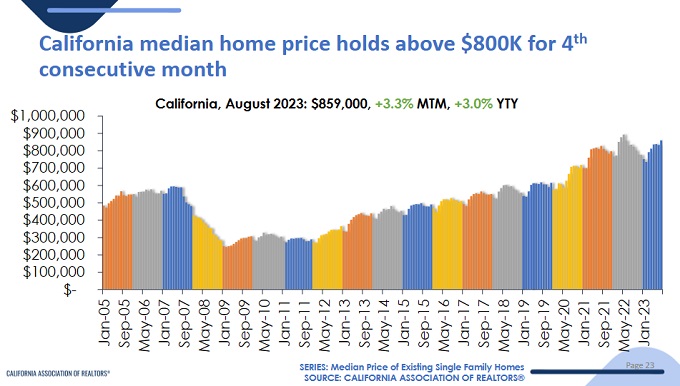
In a dynamic turn of events, the latest statistics from CAR (California Association of Realtors) suggest a potential cessation of the downward trend witnessed in the housing sector. While December 2023 witnessed a slump in prices, with Federal rate hikes seemingly taking a backseat, it may soon be the prime time for buyers to make their move.
However, a significant factor restricting buyers is the current state of low affordability, even as certain regions like the Bay Area observed a hike in prices during the same period.
Anticipated Home Sales and Prices in the Golden State
According to CAR, there is an anticipated surge in home sales by an impressive 22.9%, potentially reaching 327,100 units in the upcoming year. Alongside, the projection for home price growth stands at 6.2% in 2024, elevating the average home price to approximately $860,300.
These predictions stem from the prevailing housing shortage, which is expected to further drive the prices up. But while the mortgage rates might experience a marginal decrease in 2024, it might not suffice in tempting homeowners to sell. It seems they might wait until 2025 for substantial rate reductions, which would ideally boost the Californian economy, triggering more purchases.
One major deterrent continues to be the escalated home prices combined with hefty mortgage payments, which inadvertently propel rent prices, further intensifying inflation.
Insights from CAR’s Senior VP and Chief Economist
CAR’s Senior Vice President and Chief Economist, Jordan Levine, emphasized that the looming economic softening in 2024 could lead the Federal Reserve Bank to adopt a more relaxed monetary stance. Consequently, mortgage rates might observe a consistent downward trend, potentially averaging in the mid-5% range by the end of 2024.
However, the present scenario paints a contrasting picture. CAR’s data highlights a persistent upward pressure on housing prices, given the decline in active listings. Moreover, the extended phase of high mortgage rates compels many homeowners to refrain from selling, thus having to bear with increased mortgage payments. This becomes an escalating concern amidst the inflation-aware segment.
Southern California’s Price Trends
Southern California remains steady, with house prices retaining their position from July. Still, a noteworthy mention is the Bay Area, which saw a 0.4% price ascension. A comprehensive breakdown reveals:
- San Diego: House prices saw a 3.2% rise, touching the $1,000,000 mark.
- Orange County: A subtle 0.8% increase, leading to prices averaging at $1,310,000.
- Los Angeles County: The median price achieved was $888,000, alongside a 5.6% sale growth in August.
- San Bernardino: Experienced a 2.1% price boost, settling at a median value of $495,000.
Inventory Dynamics
There’s an evident reduction in active listings at the state level, consecutively for five months. The year-over-year decrease for the last four months stands at 20%. Particularly, active home listings witnessed a substantial drop in Alameda (-54.0%), Mono (-50.9%), and Contra Costa (-48.5%).
In terms of price realization, sellers are getting closer to their asking price, as proven by C.A.R.’s statewide sales-price-to-list-price ratio, which was 100% in August 2023, a notable increase from 98.4% in August 2022.
The Rental Perspective
While the home resales market narrates one story, the rental market sings a different tune. Rental property investors, provided they make well-informed choices, are presented with a unique opportunity to recoup their investments.
For a more extensive exploration on the Californian rental market, trends, insights, and valuable tips, we recommend browsing the ManageCasa Blog. There, one can also discover the top-ranking cities for rental property investments and acquaint themselves with proficient property management services.
Concluding Thoughts
The future of California’s housing market remains, as always, in a state of flux, influenced by various internal and external factors. From potential FED rate hikes and mortgage payment trajectories to the ongoing housing shortage and changing global economic conditions, numerous elements will shape the state’s real estate trajectory in the coming years. Monitoring these trends closely will be essential for both buyers and sellers looking to make informed decisions in the Golden State’s dynamic housing market.
The 2024 California Housing Market Insight
The coming year promises remarkable developments in California’s housing market. Guided by meticulous analysis, we’ve put together a comprehensive summary of the expected shifts and trends for 2024.
Rebound in Home Sales Amidst Economic Shifts
We anticipate a significant surge in the sale of existing single-family homes. Projected to touch 327,100 units in 2024, this marks a staggering 22.9% rise from the estimated 266,200 in 2023. The previous year saw sales figures at 342,000, and this forecasted upswing is certainly noteworthy.

Price Movement Trends
While 2022 reported a median home price at $822,300, a slight reduction of 1.5% is forecasted for 2023, settling at $810,000. However, 2024 promises an optimistic climb. The California median home price is set to ascend by 6.2%, pegging it at a handsome $860,300.
This price elevation can be attributed to the persistent housing shortage, which, combined with the highly competitive market, will continually exert upward pressure on home prices.
Mortgage Rate Fluctuations and Their Implications
A culmination of economic factors will usher in a dip in mortgage interest rates. Cooling inflation coupled with slower economic expansion is predicted to play a pivotal role in the decline of mortgage interest rates. The rates for 30-year fixed mortgages are anticipated to decrease from 6.7% in 2023 to about 6.0% in 2024. Notably, even with this decrease, the rates remain higher than those seen in the years before the pandemic, yet significantly below the 50-year average of nearly 8%.
Landscape of Housing Affordability
While the previous years saw fluctuating rates in housing affordability, 2024 is expected to maintain the same as its predecessor, holding steady at 17%. This statistic remains a significant determinant for prospective homeowners, reflecting the percentage of households that can comfortably afford median-priced homes.
graph TD;

A[2022: 19%] --> B[2023: 17%]

B --> C[2024: 17%]

D{Housing Affordability Index} --> A

D --> B

D --> C
Economic Overview and its Impact
The U.S. gross domestic product (GDP) is set for a modest rise of 0.7% in 2024, following a 1.7% increase in 2023. Unemployment rates in California will witness an uptick, reaching 5.0% in 2024, a growth from the 4.6% in 2023. Inflation rates are also on a trajectory of gradual reduction, with the Consumer Price Index (CPI) projected at 2.6% for 2024, descending from the 3.9% in 2023.
On the Horizon: 2024 and Beyond
The year 2024 is shaping up as a pivotal period for the California housing market. Favorable market conditions, characterized by declining mortgage rates and an increased housing inventory, will likely motivate both sellers and buyers to engage actively.
A significant portion of this resurgence can be attributed to first-time buyers, previously deterred by the competitive market, now aiming to realize their homeownership aspirations. Furthermore, repeat buyers, having transcended the ‘lock-in effect’, are also anticipated to make a return, given the descending mortgage rate trend.
In Conclusion
California’s housing market is poised for a transformation in 2024. While challenges persist, the market displays robust resilience, adapting to economic shifts and evolving buyer-seller dynamics. As a stakeholder, whether you’re a buyer, seller, or an industry observer, the forthcoming developments promise an exciting phase of opportunities and growth.
The Strength of Buyer Traffic in the Current Real Estate Market

In the ever-changing landscape of the real estate market, it’s not uncommon for sellers to feel a sense of hesitation. Concerns about mortgage rates and the state of the market can lead many to postpone selling their homes. However, it’s crucial to dispel these fears with solid data and insights. The latest statistics paint a reassuring picture: buyer traffic remains robust, defying expectations influenced by mortgage rate fluctuations.
The ShowingTime Showing Index: A Glimpse into Buyer Activity
To gauge the vitality of today’s real estate market, we turn our attention to the ShowingTime Showing Index. This invaluable metric tracks the number of prospective buyers actively touring homes. Let’s delve into the latest data, comparing it with historical benchmarks to gain a deeper understanding of the current scenario.

As the graph above illustrates, the numbers for June 2023 are encouraging. When juxtaposed with the corresponding period in previous years, it becomes evident that today’s buyers are remarkably active. In fact, they are more active than the norm, even in the face of higher mortgage rates.
Adapting to the New Mortgage Rate Reality
You might wonder how this increased activity is possible, given the prevailing higher mortgage rates. The explanation is rather straightforward. Buyers are adapting to the changing landscape of interest rates and have come to accept them as the new normal. Danielle Hale, Chief Economist at Realtor.com, sheds light on this phenomenon: “Interest rate hikes continue to further cut into buyers’ purchasing power, although they appear to have adapted to the higher mortgage rate environment.”
In essence, the desire to own a home remains unwavering, and those with the financial capacity to make a move in today’s rate environment are doing just that.
The Takeaway for Sellers
It’s true that the real estate market has experienced a slowdown in comparison to the frenetic pace of the past few years. However, this should not be mistaken for stagnation. The reality is that buyer traffic is still robust in today’s market. Even with the current mortgage rates, there is a considerable pool of motivated buyers actively seeking homes.
So, if you’ve been contemplating delaying your own home sale due to concerns that no one will be interested, it’s time to reconsider. Quite the opposite is true, with more buyers in the market than the norm. To leverage this opportunity effectively, it’s advisable to connect with a real estate agent who can help prepare your house for sale, ensuring it makes an impeccable first impression on these eager buyers.
In Conclusion
In conclusion, the strength of buyer traffic in the current real estate market is a testament to the enduring desire for homeownership. Despite the challenges posed by higher mortgage rates, buyers are adapting and continuing to make their moves. As a seller, this presents a favorable environment for listing your property. Embrace the active buyer pool, connect with a real estate professional, and position your home for a successful sale. The market is still very much in your favor.
Disclaimer: This article is intended for informational purposes only and should not be considered as financial or real estate advice. It is always recommended to consult with a qualified real estate professional before making any decisions related to buying or selling property.


