

 Facebook
 X
X
 Pinterest
 Copy Link
5 Tips for First Home Buying Guide – Leverage Incentives & More

Embarking on the journey to purchase your first home is a landmark occasion that signals a new chapter in your life. This process, while exhilarating, comes with its set of challenges, particularly in the current housing market characterized by a scarce supply of homes and escalating prices. However, with the right strategy, becoming a homeowner is within your reach. Here are invaluable insights to navigate the market and make homeownership a reality.
Leverage First-Time Homebuyer Incentives
The initial financial requirements of buying a home, such as the down payment and closing costs, can seem overwhelming. Fortunately, numerous programs are available to support first-time buyers. These programs often offer loans with minimal upfront costs and more lenient credit requirements. Additionally, they may provide grants and low-interest loans to assist with down payments and closing costs. Consulting with your state’s housing authority or exploring online resources like Down Payment Resource can reveal a plethora of options tailored to first-time purchasers.
Broaden Your Horizon: Condos and Townhomes
With the current shortage in housing inventory driving up prices, expanding your search to include condos and townhomes can be a smart move. These types of properties typically come at a lower price point, making them an accessible entry into homeownership. While they may offer less space than traditional single-family homes, condos and townhomes provide a valuable opportunity to start building equity. This equity can be a critical asset for future real estate endeavors, potentially facilitating a transition to a larger home when the time is right.
Innovative Home Buying Strategies: Multi-Generational and Joint Purchases
Considering a multi-generational home or purchasing property with friends or family members can also offer a practical solution to financial hurdles. By pooling resources, you can afford a larger property and share the responsibilities of homeownership, including mortgage payments and maintenance costs. This approach not only makes financial sense but can also provide a supportive living arrangement.
Final Thoughts
The path to purchasing your first home is filled with opportunities and challenges. By taking advantage of first-time homebuyer programs, considering various types of properties, and exploring creative purchasing arrangements, you can make an informed and strategic entry into homeownership. Remember, the key to navigating this journey successfully is to stay informed, keep an open mind, and seek the advice of experienced real estate professionals. Your dream home awaits, and with the right approach, you can turn that dream into reality.
Utilize First-Time Homebuyer Benefits
The financial hurdle of the down payment and closing costs is often the biggest concern for first-time buyers. Thankfully, a variety of assistance programs are designed specifically to help you overcome these obstacles. These programs may offer loans with reduced upfront costs or help with down payments and closing fees through grants and low-interest loans. Engaging with your state’s housing authority or visiting reputable online platforms can provide access to these valuable resources.
- Down Payment Resource: A comprehensive tool that helps you find programs you may be eligible for. Visit Down Payment Resource.
- HUD’s Resource List: The U.S. Department of Housing and Urban Development (HUD) offers a list of state-specific programs and information. Explore HUD’s resources at HUD.gov.
Expand Your Search to Include Condos and Townhomes
In light of the tight housing market, broadening your search to include condos and townhomes can be a smart strategy. These property types are often more affordable and can be a stepping stone to traditional homeownership, allowing you to begin building equity sooner.
- Realtor.com: Offers insights and listings for condos and townhomes, making it easier to understand your options. Check out Realtor.com.
Consider Innovative Buying Options
Exploring unconventional purchasing methods, such as buying a multi-generational home or co-owning with friends or family, can make homeownership more attainable by sharing the financial burden.
- Money.com: Provides valuable advice on joint homeownership and how to navigate buying a home with others. Learn more at Money.com.
Homebuyer Pre-Approval in 2024

Unlocking the Door to Your Dream Home: The Power of Pre-Approval
In the ever-evolving real estate market of 2024, the journey to homeownership is marked by several crucial steps. Among these, obtaining a pre-approval from a lender emerges as a pivotal move for prospective homebuyers. This comprehensive guide sheds light on the essence of pre-approval and its amplified significance in today’s market, providing you with the insights needed to navigate the process with assurance.
Understanding Pre-Approval
Pre-approval is a lender’s conditional commitment to offer you a specified loan amount, based on a thorough evaluation of your financial standing. This evaluation includes a detailed review of your income documentation, credit history, employment verification, and financial assets. The outcome is a pre-approval letter, a testament to your buying power that outlines the maximum amount you’re eligible to borrow.
Why It’s a Game-Changer
- Clarity on Budget: It demystifies the financial aspect of home buying, offering a clear picture of what you can afford. This clarity enables you to refine your home search to properties within your budget, ensuring a more focused and efficient house-hunting experience.
- Enhanced Credibility with Sellers: In a market where competition is rife, a pre-approval letter is your golden ticket. It signals to sellers that your financial credentials have been vetted and approved by a lender, distinguishing you from other potential buyers and increasing your chances of securing your desired home.
The 2024 Market Landscape: Why Pre-Approval Matters More Than Ever
The current year presents a unique set of challenges and opportunities for homebuyers. With a slight easing in mortgage rates and an uptick in home listings, the market is witnessing a resurgence of buyer interest. However, this resurgence is met with a still-limited housing inventory, leading to a competitive market environment.
Strategic Advantage in a Competitive Market
- Fast-Track to Offer Submission: In a seller’s market, the ability to act swiftly is invaluable. Pre-approval accelerates the offer-making process, allowing you to capitalize on opportunities the moment they arise.
- A Stronger Bargaining Position: When faced with multiple offers, sellers are more inclined to favor buyers whose financing is assured. Pre-approval can be the deciding factor in such scenarios, tipping the scales in your favor.
Charting Your Path to Pre-Approval
- Financial Self-Assessment: Begin with a thorough review of your financial health. This includes checking your credit score, assessing your debt-to-income ratio, and consolidating your financial documents.
- Lender Selection: Choose a reputable lender who understands your needs. Research their pre-approval process, interest rates, and loan products to ensure they align with your home buying goals.
- Application and Documentation: Complete the pre-approval application and submit the required documentation, such as W-2 forms, tax returns, bank statements, and proof of assets.
- Pre-Approval Letter: Upon approval, you’ll receive a pre-approval letter. This letter is typically valid for 60 to 90 days, giving you a defined window to find your dream home.
Conclusion: Your Key to a Smoother Home Buying Journey
In summary, obtaining a pre-approval is more than a preliminary step in the home buying process; it’s a strategic move that positions you for success in the competitive 2024 real estate market. By offering a clear insight into your financial capacity and affirming your seriousness to sellers, pre-approval sets the stage for a smoother, more confident path to homeownership. Embrace this process with the understanding and preparation it demands, and you’ll unlock the door to your dream home with greater ease and certainty.
For a thorough exploration of these steps and benefits, you can visit Homebuyer.com and Rocket Mortgage for more detailed guidance and to initiate the pre-approval process:
- Homebuyer.com’s guide on How to Get Pre-Approved For a Mortgage in 4 Simple Steps: Visit Homebuyer.com
- Rocket Mortgage’s detailed overview on How To Get Preapproved For A Mortgage: Visit Rocket Mortgage
New Construction Home Purchase

In today’s dynamic real estate landscape, the allure of new construction homes has never been more appealing. With the current scarcity of available properties, turning your attention towards newly built homes offers a promising path to finding your dream residence. The journey of acquiring a new construction home, however, is distinct and requires specialized guidance to navigate successfully. This is where the expertise of a dedicated real estate agent becomes invaluable.
Local Market Insights and Strategic Planning
A proficient agent brings to the table an in-depth understanding of local market dynamics and future development plans. Such insights are crucial for assessing the potential of your investment and ensuring your new home’s surroundings align with your long-term living aspirations.
Understanding Community Evolution
Your agent’s knowledge extends beyond current listings to include upcoming developments, zoning changes, and other factors that could impact the value and enjoyment of your home. Whether it’s the construction of new amenities or changes in infrastructure, your agent ensures you have all the information needed to make a well-informed decision.
Unmatched Expertise in Construction and Builder Quality
Choosing the right builder is as critical as selecting the perfect home layout. Your agent’s experience with various builders enables you to differentiate between those who deliver quality and those who fall short.
Ensuring Quality and Satisfaction
Agents keep abreast of builders’ reputations through feedback from past clients and industry connections, providing you with a clear picture of what to expect in terms of construction quality and customer service.
Customization Guidance for Value Enhancement
One of the most exciting aspects of new construction is the ability to personalize your home. An agent with a keen eye for detail helps you navigate the myriad of customization options, advising on selections that enhance both the aesthetic appeal and market value of your home.
Making Smart Upgrade Choices
With an understanding of market trends, your agent can recommend upgrades that strike the perfect balance between personal preference and investment wisdom, ensuring your home remains appealing to future buyers.
Navigating Builder Negotiations and Contracts with Ease
The negotiation process with builders can be daunting. A seasoned agent transforms this challenge into an opportunity, leveraging their negotiation skills to secure favorable terms, including price concessions, upgrades, or flexible closing dates.
Deciphering Complex Contracts
Beyond negotiations, your agent plays a pivotal role in clarifying the intricacies of builder contracts. Their expertise safeguards you from overlooked clauses that could compromise your interests, ensuring a transparent and secure transaction.
Conclusion: A Partner in Your Homebuying Journey
Embarking on the journey to purchase a new construction home without a dedicated agent means navigating an intricate process alone. From uncovering the right property to ensuring the final contract aligns with your best interests, the value of an experienced real estate agent cannot be overstated. As your partner, they provide the knowledge, insight, and expertise necessary to make your homebuying experience as seamless and rewarding as possible.
If the prospect of buying or building a new construction home excites you, the first step is connecting with a local real estate agent who can guide you through each stage of the process, ensuring your journey to homeownership is a resounding success.
Your path to a new construction home is a journey best navigated with a knowledgeable and dedicated agent by your side, ensuring every decision along the way adds value and joy to your homebuying experience
Certainly, here’s how you can include the external links in markdown format for the last section of your article:
“`markdown
To further enhance your understanding and preparation for buying a new construction home, the following external resources offer valuable insights and guidance:
1. **National Association of Realtors (NAR)** – [Home Buying Guide]: Provides comprehensive advice on the home buying process, including the importance of working with a real estate agent.
2. **Consumer Financial Protection Bureau (CFPB)** – [Home Buying Information]: Offers tools and resources to help consumers navigate the complexities of buying a home, focusing on financing, mortgages, and consumer rights.
3. **U.S. Department of Housing and Urban Development (HUD)** – [Buying a Home]: Delivers crucial information on home buying, including a section on shopping for a new home and the benefits of working with a real estate agent.
4. **Building Industry Association of America (BIAA)** – [New Home Buyers Guide]: Provides insights into selecting builders, understanding the construction process, and the advantages of new construction homes.
“`
Foreclosure Trends

Foreclosure Trends: A Comprehensive Analysis
Introduction
In recent times, the real estate market has been under the microscope, with particular attention paid to foreclosure activities. Amidst swirling headlines and the buzz of speculation, it’s crucial to dissect the data and understand the real trends in foreclosure activities. This article aims to provide a thorough analysis, debunking common misconceptions and offering a clearer picture of the current state of foreclosures in the housing market.
Foreclosure Activity: Beyond the Headlines
The narrative surrounding an apparent surge in foreclosure activities requires a nuanced examination. It’s essential to distinguish between sensationalized reporting and the actual dynamics at play. A closer look at the data reveals that while there has been a nominal increase in foreclosure filings, the context dramatically alters the interpretation of these figures.
Historical Context and Misleading Comparisons
The comparison of current foreclosure rates to those during the pandemic-induced lows paints an incomplete picture. The pandemic era was characterized by unprecedented government interventions, including moratoriums and forbearance programs, which temporarily suppressed foreclosure activities to historical lows. As these measures phased out, a correction was naturally anticipated.
Long-term Trends vs. Short-term Fluctuations
A comprehensive analysis involves juxtaposing current foreclosure activities against a broader historical backdrop. This approach demystifies the perceived surge and illustrates that foreclosure rates remain significantly below the long-term averages, especially when contrasted with the pre-2008 housing crisis levels.
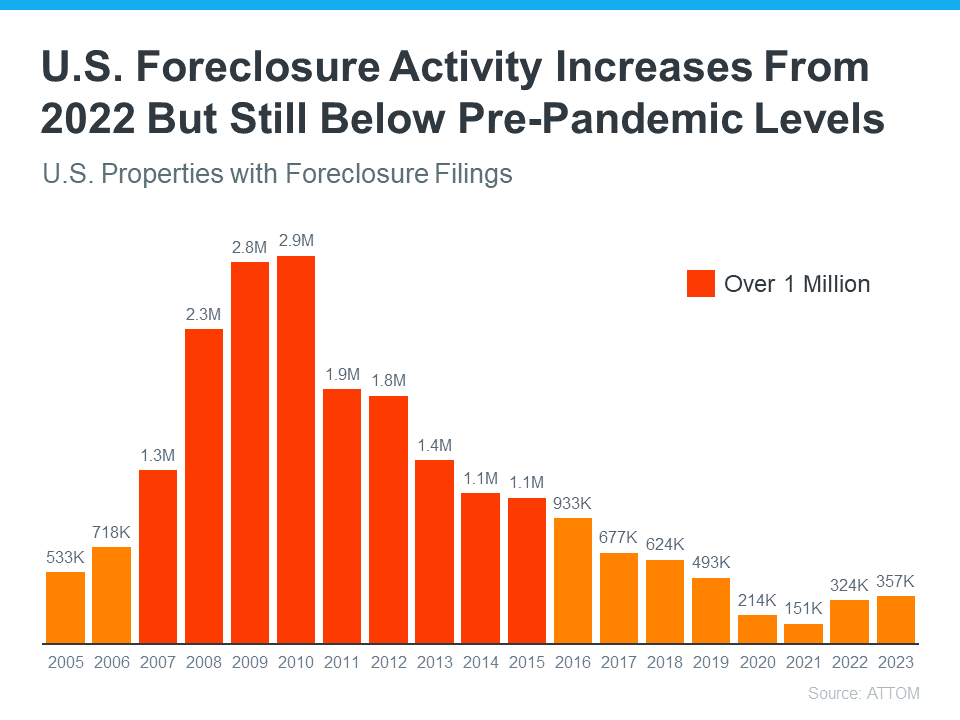
Analyzing the Data
The real estate market has exhibited resilience, with foreclosure activities not only stabilizing but also maintaining a trajectory well below the alarmist forecasts. This stabilization is attributed to several key factors:
- Increased Homeowner Equity: The majority of homeowners have accumulated significant equity in their properties, providing a buffer against foreclosure.
- Low Delinquency Rates: Despite economic uncertainties, delinquency rates have remained low, indicating a healthy mortgage landscape.
- Stronger Borrower Profiles: Today’s borrowers are better qualified, with stringent lending standards ensuring a robust vetting process.
The Future of Foreclosure Activity
Looking ahead, the data suggests a stable real estate market, with foreclosure activities expected to normalize within the historical averages. This normalization is not indicative of a crisis but rather a return to pre-pandemic operational levels.
Conclusion
The discourse around foreclosure activities necessitates a departure from sensationalism towards a data-driven analysis. The evidence clearly indicates that the market is far from a foreclosure crisis. Instead, it is moving towards equilibrium, characterized by healthy foreclosure activities within expected ranges. For those navigating the housing market, understanding these trends is crucial for making informed decisions, free from the distortions of headline-driven panic.
In essence, the real estate market continues to demonstrate strength and resilience, with foreclosure activities reflecting a natural adjustment rather than a systemic failure. This analysis not only provides clarity but also reassures stakeholders of the market’s underlying stability.
Recommended External Sources:
- ATTOM Data Solutions: For detailed foreclosure and housing market data. Visit ATTOM
- CoreLogic: For insights on property information, analytics, and mortgage delinquency rates. Visit CoreLogic
- National Association of Realtors (NAR): For reports on housing market trends and forecasts. Visit NAR
- Consumer Financial Protection Bureau (CFPB): For information on mortgage assistance and foreclosure prevention resources. Visit CFPB
Mortgage Rates

Understanding Mortgage Rates: A Comprehensive Guide for Homebuyers
Introduction
In the dynamic landscape of real estate, understanding the intricacies of mortgage rates is crucial for prospective homebuyers. The fluctuation of mortgage rates over recent years, from record lows to significant rises and subsequent decreases, underscores the importance of grasping the underlying factors that drive these changes. This article delves into the primary elements influencing mortgage rates, offering insights to navigate the complexities of home financing.
The Role of Inflation and the Federal Reserve
Impact of Inflation
Inflation plays a pivotal role in the fluctuation of mortgage rates. It erodes purchasing power, prompting the Federal Reserve to adjust the Federal Funds Rate to stabilize the economy. These adjustments, while indirect, significantly influence mortgage rates. High inflation leads to anticipations of Federal Reserve rate hikes, propelling mortgage rates upward. Conversely, as inflation decelerates, expectations of rate cuts emerge, contributing to lower mortgage rates.
Federal Reserve’s Strategy
The Federal Reserve’s strategy to manage inflation involves modifying the Federal Funds Rate, impacting mortgage rates indirectly. Recent trends have seen the Fed increase this rate in an effort to combat inflation, resulting in a rise in mortgage rates. However, projections for the upcoming year suggest a shift towards more favorable conditions for both inflation and mortgage rates, with potential rate cuts as inflation cools.
The Significance of the 10-Year Treasury Yield
Mortgage Rates and Treasury Yield
Mortgage lenders frequently reference the 10-Year Treasury Yield to set interest rates on home loans. A rise in the yield typically leads to increased mortgage rates, and vice versa. The correlation between the 10-Year Treasury Yield and mortgage rates, although historically consistent, has shown deviations, indicating the potential for mortgage rates to adjust.
Monitoring Treasury Yield Trends
Keeping an eye on the trends of the Treasury yield provides valuable insights into the future direction of mortgage rates. This monitoring aids experts and homebuyers alike in making informed decisions regarding home financing.
Navigating Mortgage Rate Changes
Expert Outlook
With a Federal Reserve meeting on the horizon, industry experts are vigilant, watching for decisions that could affect the economy and, by extension, mortgage rates. The anticipation of these decisions highlights the importance of staying informed and prepared for potential shifts in the financial landscape.
The Importance of Professional Guidance
For those navigating the complexities of mortgage rates and homebuying, having a team of professionals provides indispensable support. Experts can offer tailored advice, helping homebuyers make decisions that align with their financial goals and the current market conditions.
Conclusion
The factors influencing mortgage rates are multifaceted, encompassing economic indicators like inflation and the Federal Reserve’s policies, as well as the 10-Year Treasury Yield. Understanding these elements is essential for prospective homebuyers to navigate the complexities of securing a mortgage. As the market evolves, staying informed and seeking professional guidance will remain key to making sound financial decisions in the realm of real estate.
Recommended External Links:
- Federal Reserve Board – Understanding Interest Rates, Inflation, and Bonds: https://www.federalreserve.gov/faqs/money_12848.htm This link provides foundational knowledge on how the Federal Reserve’s interest rate decisions influence economic factors like inflation and bond yields, crucial for understanding mortgage rates.
- U.S. Department of the Treasury – Daily Treasury Yield Curve Rates: https://www.treasury.gov/resource-center/data-chart-center/interest-rates/Pages/TextView.aspx?data=yield This official source offers up-to-date information on Treasury yield rates, including the 10-Year Treasury Yield, which is directly linked to mortgage rates.
- Investopedia – How The Federal Reserve Affects Mortgage Rates: https://www.investopedia.com/articles/personal-finance/081315/how-federal-reserve-affects-mortgage-rates.asp An educational resource that explains the relationship between the Federal Reserve’s policies and the fluctuation of mortgage rates, providing a deeper understanding for homebuyers.
- Realtor.com – Mortgage Rates Forecast: https://www.realtor.com/research/topics/mortgage-rates-forecast/ Offers forecasts and analyses on mortgage rates, giving homebuyers insights into future trends and how they might affect the housing market.
- Consumer Financial Protection Bureau – Guide to the Mortgage Process: https://www.consumerfinance.gov/owning-a-home/process/ This comprehensive guide aids homebuyers in understanding the mortgage process from start to finish, emphasizing the importance of rates and the overall financing journey.
Silver Tsunami: Understanding the Impact of the “Silver Tsunami” on the 2024 Housing Market

Silver Tsunami: Introduction
The concept of the “Silver Tsunami” has sparked significant discussion among real estate professionals, economists, and the public at large. This phenomenon, tied to the aging baby boomer generation, is anticipated to create a wave of changes in the housing market. As baby boomers move into retirement, their housing needs and preferences are expected to shift, potentially leading to an influx of larger homes on the market. This article delves into the Silver Tsunami and its projected impact on the housing market in 2024.
Decoding the “Silver Tsunami”
What is the “Silver Tsunami”?
The term “Silver Tsunami” refers to the demographic trend of aging baby boomers altering their living arrangements to better suit their advancing years. This generational shift is expected to cause a substantial number of older adults to downsize their homes. Given the sheer size of the baby boomer generation, this trend could significantly influence the real estate market.
Projected Market Changes
The Silver Tsunami is anticipated to lead to a higher availability of larger homes, as many baby boomers opt for smaller, more manageable living spaces. This could result in an increase in supply in certain housing markets, potentially affecting property values and market dynamics.
Analyzing the Impact on the 2024 Housing Market
While the Silver Tsunami presents a logical theory, experts suggest its impact on the 2024 housing market may not be as profound as some predict.
Baby Boomers’ Reluctance to Move
Research from AARP indicates that over half of adults aged 65 and older prefer to age in place, choosing to remain in their current homes rather than relocate. This preference diminishes the likelihood of a sudden surge in the housing market caused by mass downsizing.
A Gradual Shift Rather Than a Sudden Wave
Mark Fleming, Chief Economist at First American, emphasizes that demographic shifts, like those expected from the Silver Tsunami, tend to occur gradually over extended periods. The baby boomer generation spans nearly two decades, suggesting that any related changes in the housing market will unfold over a similar timeframe.
Conclusion
In conclusion, while the Silver Tsunami is an important factor to consider, its impact on the 2024 housing market is expected to be gradual and subtle rather than abrupt and transformative. Stakeholders in the real estate sector should prepare for a steady evolution in market dynamics rather than a swift overhaul.
Certainly, to enhance the quality and credibility of the article on the Silver Tsunami’s impact on the 2024 housing market, I recommend including the following external links based on the content:
- AARP Research on Aging in Place: Link to the latest research or surveys conducted by AARP that discuss the preferences of older adults, particularly their tendency to age in place. This will support the point about baby boomers’ reluctance to move. AARP Research
- Housing Market Trends and Data: Link to a reputable source like Zillow or Realtor.com for current housing market trends and data. This will provide readers with up-to-date information on the housing market dynamics. Zillow Research or Realtor.com Market Data
- First American Economic Center: As Mark Fleming is mentioned in the article, a link to First American’s Economic Center, where readers can find more insights from him and other economists, would be beneficial. First American Economic Center
- Demographic Data: Link to a government or academic source that provides detailed demographic data on the baby boomer generation. This would help readers understand the scale and characteristics of this demographic group. U.S. Census Bureau
- Real Estate Market Analysis Reports: Linking to an annual or quarterly real estate market analysis report from a reputable financial or real estate analysis firm could provide a deeper understanding of the long-term trends impacting the housing market. CBRE Market Reports
- Senior Housing Options and Trends: A link to a site that offers information on senior housing options, reflecting the changing needs and preferences of the aging population. Senior Housing News
Multi-Generational Homes: A Strategic Choice for Modern Living

Multi-Generational Homes
In the evolving landscape of real estate, the concept of multi-generational living has emerged as a beacon of innovation and practicality. This living arrangement, which brings together family members from different generations under one roof, offers a plethora of advantages that cater to both financial prudence and familial harmony.
Financial Benefits and Cost Efficiency
One of the most compelling reasons for the surge in multi-generational home purchases is the significant financial benefits it offers. The synergy of shared living expenses, such as mortgage payments, utilities, and maintenance costs, creates an economical living situation. This collective approach to homeownership allows individuals to pool their resources, thereby making the dream of owning a home more attainable and sustainable.
Enhanced Purchasing Power
The financial unity among family members in a multi-generational home extends beyond mere cost-sharing. It amplifies the purchasing power, enabling the acquisition of properties that might otherwise be out of reach. This arrangement is particularly advantageous for first-time buyers, who find that combining incomes with family members can unlock the potential to invest in larger, more desirable homes. The collaborative financial model not only eases the burden of mortgage payments but also fosters a sense of shared investment and ownership.
A Solution for Aging in Place
The design of multi-generational homes addresses another critical aspect of contemporary living: the desire for aging family members to remain in a familiar, comfortable environment. These homes offer a viable solution for supporting older adults in aging in place, surrounded by the care and companionship of their family. This setup not only enhances the quality of life for the elderly but also provides peace of mind to the family, knowing that their loved ones are in a safe, supportive environment.
Strengthening Family Bonds
Beyond the financial and practical benefits, multi-generational living nurtures closer family relationships. This living arrangement fosters an environment of mutual support, where daily interactions strengthen bonds and create a strong sense of community within the home. It encourages the sharing of responsibilities, from household chores to caregiving duties, promoting a culture of cooperation and respect among family members.
Leveraging Expertise in Home Selection
The journey to finding the ideal multi-generational home is unique and requires thoughtful consideration of each family member’s needs and preferences. Engaging with a knowledgeable real estate agent who specializes in multi-generational properties can simplify this process. These professionals possess the expertise to identify homes that meet the specific requirements of multi-generational living, ensuring that the chosen property accommodates the lifestyle and aspirations of all family members.
Conclusion
The decision to purchase a multi-generational home is a testament to the evolving understanding of what it means to live well. It represents a strategic choice that balances financial savvy with the deep-rooted human desire for connection and support. For those considering this path, the benefits are clear: economic efficiency, support for aging family members, and an enriched family life. As more individuals recognize these advantages, the popularity of multi-generational homes is set to rise, redefining the landscape of modern living.
To complement the content of the article on multi-generational homes, I recommend the following external links for further reading and resources:
- National Association of Realtors (NAR) – https://www.nar.realtor/
For statistics and in-depth analysis on multi-generational living trends and how they impact the real estate market. - AARP HomeFit Guide – https://www.aarp.org/livable-communities/info-2014/aarp-home-fit-guide-aging-in-place.html
Offers comprehensive tips and suggestions for making homes more livable for people of all ages, particularly focusing on modifications that support aging in place. - Generations United – http://www.gu.org/
Provides resources and research on multi-generational living arrangements, highlighting the benefits of such living situations for both younger and older generations. - HomeAdvisor Aging in Place – https://www.homeadvisor.com/r/aging-in-place/
A resource for finding contractors skilled in home modifications for aging in place, which is an essential aspect of multi-generational homes. - The Spruce – Multi-Generational House Plans – https://www.thespruce.com/multigenerational-house-plans-1822296
Offers ideas and inspiration for house plans that cater to multi-generational living, helping families find designs that suit their unique needs.
These links provide valuable information and resources that align with the topics covered in the article, including financial planning, home design, and caregiving for elderly family members within a multi-generational living context.
Homeownership

Homeownership: The Core of Your American Dream, Brought to You by Century 21 Jordan-Link & Co.
Homeownership has long been the cornerstone of the American Dream, and its significance continues unwaveringly in today’s world. More than just a roof over your head, owning a home represents a profound sense of achievement and freedom. As observed by industry experts, the aspiration to own a home is a key element of the American ethos, reflecting a deep-rooted desire for stability and belonging.
The Tangible Rewards of Homeownership
Owning a property isn’t just a milestone; it’s a substantial investment in your financial future. Renowned authorities in real estate highlight that homeownership is the foremost strategy for wealth accumulation in America. This is not just about the present moment but also about securing prosperity for future generations. As highlighted by leading housing organizations, owning a home serves as an effective savings plan. Each mortgage payment is a step towards increasing your equity, and over time, this can lead to significant wealth accumulation. Moreover, homeownership is often a key factor in fostering a cycle of property ownership across generations, thus enhancing familial financial stability.
 Beyond Finances: The Emotional and Social Benefits of Owning a Home
The advantages of owning a home extend beyond financial gains. There are profound emotional and social benefits tied to having a place you can truly call your own. Surveys conducted by housing agencies reveal that homeowners cite control over their living space, a sense of security and privacy, and the ability to provide a nurturing environment for their family among the top benefits of owning a home.
Your Dream, Our Mission
At Century 21 Jordan-Link & Co., we understand that your vision of the American Dream likely includes a sense of independence, security, and prosperity—elements that homeownership can significantly contribute to. With favorable mortgage conditions, now could be an ideal time to embark on your journey to homeownership.
If you’re poised to make this life-changing decision, our team of dedicated and knowledgeable real estate professionals is here to guide you every step of the way. As leading local experts in the real estate market, we can help you navigate the path to finding a place you can proudly call your own.
In Conclusion
Purchasing a home is more than an investment; it’s a commitment to your future and a fundamental aspect of the American Dream. If owning a home is part of your vision, connect with a Century 21 Jordan-Link & Co. real estate advisor today and begin the journey to turn your dream into reality.
For more insights on home buying and the real estate market, visit our website at Jordanlink.com. Century 21 Jordan-Link & Co., with over 350 local real estate agents, is committed to helping you find your perfect home.
Home Equity: A Comprehensive Guide
Understanding Home Equity: A Comprehensive Guide

Photo by OpenClipart-Vectors
on Pixabay
## Introduction
If you’ve owned your house for a few years, you may have heard the term “home equity” thrown around. But do you really know what it means and how it can benefit you? In simple terms, home equity refers to the difference between the current value of your home and the amount you owe on your mortgage. As you pay down your mortgage over time and as home values increase, your equity grows. In this comprehensive guide, we will explore the concept of home equity in detail, discuss its significance, and explore various ways you can leverage it to your advantage.
The Benefits of Home Equity
Homeownership can be a powerful wealth-building tool, and growing home equity is a testament to that. As home prices continue to rise, homeowners are reaping the benefits. According to the latest Equity Insights Report, the average U.S. homeowner gained over $20,000 in additional equity compared to the previous year. Some markets are even experiencing larger increases as price growth catches up. Let’s delve into the benefits of home equity and how it can positively impact your life.
1. Buy a Home That Fits Your Needs
One of the most obvious ways to utilize your home equity is to put it towards the purchase of a new home that better suits your changing needs. If your current space no longer meets your requirements, whether due to a growing family or downsizing, using your equity as a down payment can make the transition easier. By tapping into your equity, you can access funds that would otherwise be tied up in your home.
2. Reinvest in Your Current Home
If you’re not ready to move just yet or simply love your current home, reinvesting your equity back into your property can be a smart move. By making strategic upgrades and renovations, you can potentially increase the value of your home. However, it’s essential to prioritize projects that offer the highest return on investment when it comes time to sell. Consulting with a real estate agent can help you identify the most lucrative improvements for your specific market.
3. Pursue Personal Ambitions
Home equity can also serve as a catalyst for realizing your lifelong dreams. Whether it’s starting a new business venture, funding your retirement, or furthering your education, your home equity can provide the financial means to achieve these goals. It’s crucial to exercise responsible financial management and avoid using your equity for unnecessary spending. Instead, consider investing it in endeavors that will have a meaningful and lasting impact on your life.
4. Understand Your Options to Avoid Foreclosure
While foreclosure rates have decreased in recent years, some homeowners still face financial hardships that could lead to foreclosure. In such situations, having a clear understanding of your options is crucial. Home equity can act as a safety net, providing a cushion that can help you navigate through difficult times. Consulting with a real estate professional can help you explore the best course of action and potentially avoid foreclosure.
Assessing Your Home Equity
Now that you understand the benefits of home equity, you’re probably wondering how to determine the amount of equity you have in your home. Connecting with a local real estate agent is an excellent starting point. They can provide a professional equity assessment report, which will outline how much equity you’ve built up over time. Additionally, they can guide you on how to leverage your equity to achieve your specific goals.
Conclusion
Home equity is a valuable asset that can provide numerous opportunities for homeowners. Whether you’re looking to upgrade to a larger home, invest in your current property, pursue personal ambitions, or safeguard against financial difficulties, understanding and utilizing your home equity can be a game-changer. By partnering with a knowledgeable real estate professional, you can navigate the intricacies of the real estate market and make informed decisions that align with your long-term goals. So, take advantage of the wealth-building potential of homeownership and unlock the power of your home equity today.
Note: This article is for informational purposes only and should not be considered financial or legal advice. Please consult with a qualified professional for personalized guidance.
10 Reasons Why Now is the Perfect Time to Buy Real Estate
Benefits of Buying Property
Investing in real estate can be a wise financial decision, and there are numerous benefits to purchasing property in today’s market. Whether you are a first-time buyer or a seasoned investor, now is the perfect time to consider buying real estate. Here are 10 reasons why:
- Low Interest Rates: One of the main advantages of buying property now is the historically low interest rates. Mortgage rates are currently at all-time lows, making it more affordable to finance your purchase.
- Rising Property Values: Real estate values have shown a steady increase over the years. By buying property now, you have the potential to benefit from the appreciation in value over time.
- Stable Investment: Real estate is generally considered a stable and solid investment. Unlike other forms of investment, such as stocks or cryptocurrencies, property values tend to be less volatile and can provide a reliable source of long-term wealth accumulation.
- Tax Benefits: Owning property comes with certain tax advantages. Mortgage interest deductions, property tax deductions, and depreciation benefits can all help reduce your tax liability.
- Rental Income Potential: Buying real estate can provide you with an additional income stream through rental properties. With the increasing demand for rental housing, investing in rental properties can be a lucrative opportunity.
- Asset Diversification: Investing in real estate allows you to diversify your investment portfolio. By spreading your investments across different asset classes, such as real estate, stocks, and bonds, you can mitigate risk and increase your chances of positive returns.
- Long-Term Financial Security: Purchasing property now can contribute to your long-term financial security and provide a stable foundation for your future. Real estate is a tangible asset that you can rely on even during times of economic uncertainty.
- Homeownership Benefits: If you’re tired of renting and want to own your own home, now is a great time to buy. Homeownership offers a sense of pride, stability, and the freedom to make your space truly yours.
- Availability of Financing Options: Banks and financial institutions are more willing to provide financing options for real estate purchases, especially with the current low interest rates. Take advantage of the availability of financing and secure a mortgage that suits your needs.
- Market Stability: Despite occasional fluctuations, the real estate market has historically shown stability and resilience. By purchasing property now, you can benefit from the overall stability of the market.
Real Estate Market Forecast
When considering buying real estate, it is essential to analyze the market forecast and gain insights into future trends. While no one can predict the future with certainty, here are some projections for the real estate market:
- Continued Low Interest Rates: Experts believe that interest rates are expected to remain low in the near future, making it an opportune time to secure financing for your property purchase.
- Strong Demand: The demand for real estate, both for personal use and investment purposes, is expected to remain high. The population growth, urbanization, and changing lifestyles contribute to the sustained demand in the market.
- Limited Inventory: The supply of available properties may be limited in some areas, driving up property prices. If you find a property that meets your criteria, it is advisable to act quickly to secure your purchase.
- Technological Advancements: The real estate industry is embracing technology, which makes property transactions faster and more efficient. Online listings, virtual tours, and digital closing processes are becoming more prevalent, simplifying the buying process.
- Shifts in Homebuying Preferences: The preferences of homebuyers are evolving, with an increased emphasis on amenities such as home offices, outdoor spaces, and energy efficiency. Understanding these shifting preferences can help you make informed decisions.
Real Estate Investment Opportunities
Aside from the benefits and market forecast, it is crucial to identify specific real estate investment opportunities that can yield attractive returns. Here are some areas to explore:
Fixer-Uppers: Buying a property in need of renovation can be a smart investment. By putting in some work and improving the property’s condition, you can significantly increase its value and potentially sell it for a higher price.
- Up-and-Coming Neighborhoods: Look for neighborhoods that are experiencing revitalization or gentrification. Investing in these areas early on can lead to substantial returns as property values appreciate with increased demand.
- Short-Term Rentals: With the rise of platforms like Airbnb, investing in properties that can be rented out on a short-term basis can be a lucrative opportunity. Vacation hotspots and popular cities can generate significant rental income.
- Commercial Properties: Consider diversifying your investments by exploring commercial real estate opportunities. Retail spaces, office buildings, and industrial properties can provide stable income streams and potential for long-term capital appreciation.
- Real Estate Investment Trusts (REITs): If you prefer a more hands-off approach to real estate investing, REITs offer a way to invest in real estate without directly owning properties. These investment vehicles allow you to buy shares and earn dividends from a portfolio of income-generating properties.
Current Housing Market Analysis
Before making any real estate purchase, it is crucial to analyze the current housing market carefully. Consider the following factors:
- Local Market Trends: Explore the current trends in the local housing market. Are home prices increasing or decreasing? How long are properties staying on the market? Understanding these trends will help you gauge the overall health of the market.
- Comparable Sales: Look at recent comparable sales in the area to assess property values. This information will enable you to make informed decisions about the fair market value of a property you are interested in.
- Economic Outlook: Consider the economic outlook of the area where you plan to purchase real estate. Is the local economy growing? Are there major employers in the area? A healthy economy can positively impact property values.
- Housing Affordability: Evaluate whether the properties in the area are affordable for your budget. Take into account your income, expenses, and down payment requirements to ensure the purchase aligns with your financial goals.
- Local Amenities and Infrastructure: Assess the proximity and quality of amenities and infrastructure in the area. Factors such as schools, healthcare facilities, transportation options, and recreational areas can influence property values and appeal to potential buyers or renters.
Remember, buying real estate is a significant financial decision, and thorough research and analysis are essential. Consult with real estate professionals, conduct due diligence, and carefully consider your own financial situation before making a purchase. With the right timing and a well-informed approach, buying real estate can provide you with a valuable asset and potentially excellent returns on your investment.


